
Why Your Hands Hurt More in Winter — and What Herbal Heat Therapy Actually Does About It
You notice it the moment you step outside on a cold morning: your fingers stiffen up, your knuckles ache, and tasks that were fine yesterday — opening a jar, typing, gripping a steering wheel — suddenly feel like a real effort. It's not your imagination, and it's not just being dramatic about the cold. There's a real physiological reason winter makes hand pain worse, and understanding it makes the solution a lot clearer.
What Cold Weather Actually Does to Your Hands
When temperatures drop, your body's first priority is keeping your core warm. To do that, it narrows the blood vessels in your extremities — your fingers and hands included — to redirect blood flow inward. Less circulation means less warmth, less oxygen, and less fluid movement in the small joints of your hands. Tendons and ligaments also stiffen in the cold, the same way a rubber band gets less flexible when you put it in the freezer.
For most people, this is a minor inconvenience. For anyone managing arthritis, carpal tunnel syndrome, or the cumulative stiffness that comes from years of repetitive hand use, it's a meaningful step backward. The joints that were manageable in September become noticeably more painful and restricted by November — not because the condition got worse, but because cold stripped away the warmth and circulation that were quietly helping all along.
Why Heat Helps — and Why the Type of Heat Matters
Heat therapy works by reversing exactly what the cold did. Warmth causes blood vessels to dilate, circulation to increase, and soft tissue to relax. More blood flow means more oxygen and nutrients reaching stiff muscles and joints, and better removal of the metabolic waste that contributes to that deep, dull ache. Tendons and ligaments become more pliable, which directly improves range of motion.
But not all heat is equal. A dry electric heating pad warms the surface of your skin. Moist heat — the kind that comes from a wrap filled with natural grains and herbs — penetrates more deeply into tissue. The moisture in the filling conducts heat differently than dry air does, and that difference is felt in the quality of the relief.
There's also the aromatherapy dimension, which tends to get dismissed as a nice extra but is actually doing real work. Herbs like lavender and chamomile have well-documented calming effects on the nervous system. When you're in pain, your muscles tense as a protective response — that tension compounds the ache. Scent signals that travel through the olfactory system can genuinely interrupt that stress-tension cycle, helping your body let go rather than brace.
The Comfort Mitts: Heat Therapy Built for Hands Specifically
Most heat packs are designed for the back, neck, or shoulder — large, flat surfaces. Your hands are a completely different shape, with joints that need to be surrounded by warmth, not just rested against it. That's the design problem the Herbal Concepts Comfort Mitts solve.
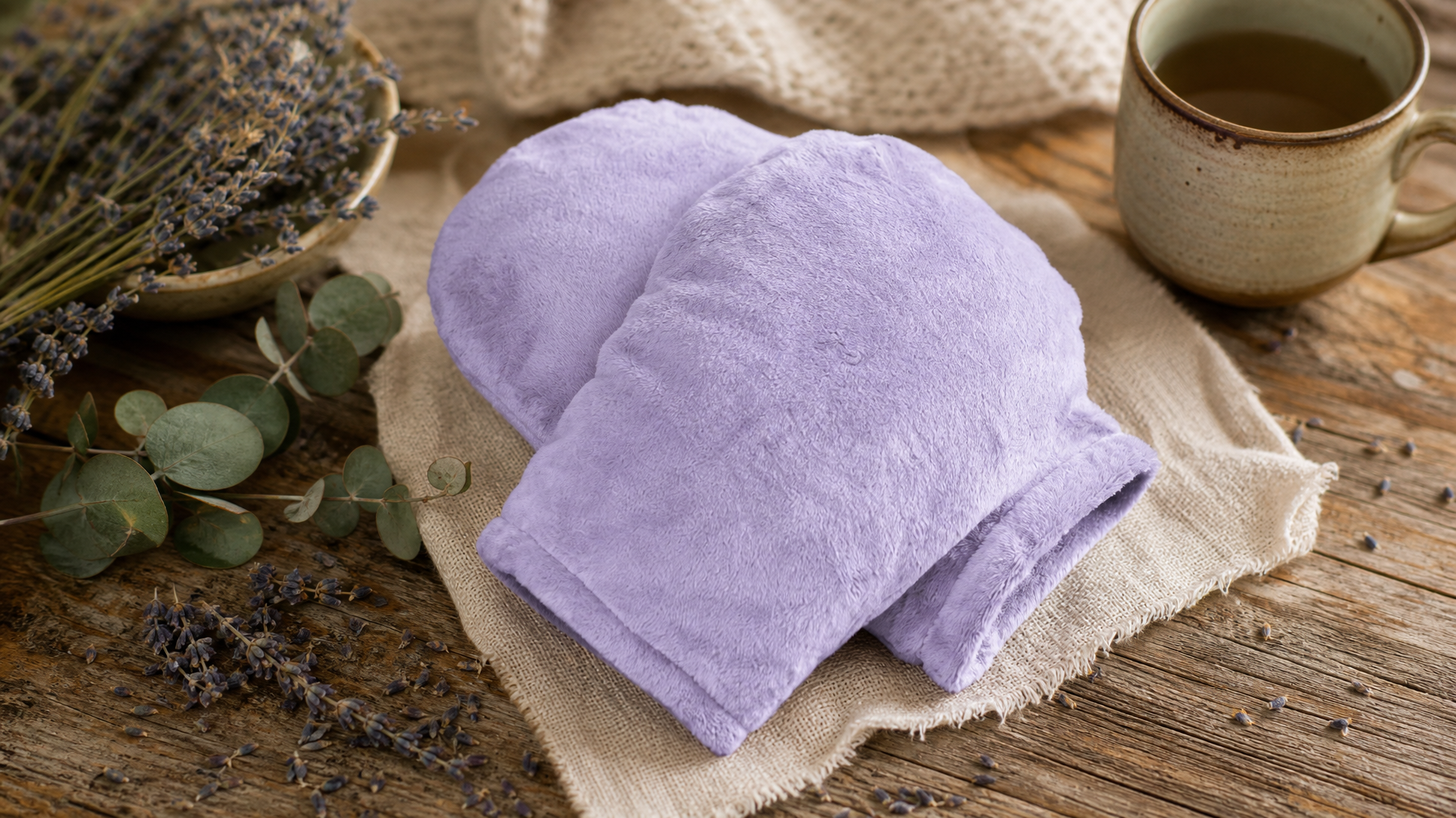
The Comfort Mitts are plush, mitten-shaped wraps made from soft 100% polyester fleece. You slip both hands in, and the wrap encloses your fingers, knuckles, and palm — not just the back of your hand. The filling is a blend of 12 natural herbs and grains, including lavender, chamomile, eucalyptus, and peppermint, along with flax seed and wheat, which retain and radiate heat evenly. The whole thing goes in the microwave for hot therapy, or in the freezer for cold — useful on days when swelling is the primary issue rather than stiffness, since cold therapy helps reduce inflammation.
The one-size-fits-all design is genuinely accommodating — the mitts are oversized and cushioned rather than fitted, so they work whether your hands are large or small, and whether you're dealing with swelling that makes a snug fit uncomfortable.
What makes these different from a standard gel pack or an electric heating pad isn't just the shape. It's that the heat is moist (from the grain filling), the aromatherapy is active while you use them, and the whole experience is designed to be calming — not clinical. That matters when you're trying to get your hands to actually relax, not just get warm.
When to Use Them (and When Not To)
Hot therapy is best for stiffness, tightness, and chronic aching — the kind of hand pain that's worse in the morning or after long periods of inactivity in the cold. Warm up the mitts, slip them on for a session while you sit down, and let the heat and herbs do the work. Many people find this most useful first thing in the morning before the day's demands start, or in the evening after a long day of keyboard use or manual work.
Cold therapy — freezing the mitts instead — is better suited for acute flare-ups, post-activity swelling, or any time your hands feel hot and inflamed rather than stiff and tight. Switching between the two modes depending on what your hands need that day is one of the more practical aspects of having a dual-use product.
One clear caution: heat therapy is not appropriate over open wounds, broken skin, or areas with significantly reduced sensation. If you have a condition that affects circulation or nerve sensitivity in your hands, check with your doctor before using heat therapy regularly.
Making It Part of a Real Routine
The people who get the most out of herbal heat therapy are the ones who use it consistently, not just on the worst days. A ten-to-fifteen minute session with the Comfort Mitts while you read, watch something, or simply sit quietly is a genuinely low-effort habit. It doesn't require carving out extra time — it layers onto something you're already doing.
If winter hand pain is part of a broader pattern of tension and stress, it's worth reading about how heat therapy and mindfulness work together for emotional wellness — the physical and mental sides of chronic discomfort are more connected than most people realize. And if you're curious about the broader role of herbal remedies in a daily wellness practice, this guide to herbal heating pads covers the principles well.
Cold weather doesn't have to mean months of aching, stiff hands. If you've been reaching for ibuprofen every November and wondering if there's a better way to manage the seasonal shift, this is a reasonable place to start.
Ready to give your hands some proper relief? Shop the Hand Heat Pads collection at Herbal Concepts and try the Comfort Mitts for yourself — use code HERBALVIBES10 for 10% off your order.
Frequently Asked Questions
How long should I heat the Comfort Mitts in the microwave?
Heating times can vary depending on your microwave's wattage, so start with a short interval, check the temperature, and add time in small increments if needed. The mitts should feel comfortably warm — not hot enough to cause discomfort. Always follow the product's included care instructions for the safest result.
Can the Comfort Mitts help with arthritis specifically?
Moist heat is a widely used approach for managing the stiffness and aching associated with arthritis, particularly in the hands and fingers. The Comfort Mitts are designed to enclose the hand fully, delivering warmth to the joints from multiple sides. That said, they're a comfort and self-care tool — not a medical treatment — so if you have a diagnosed condition, it's worth discussing heat therapy with your doctor as part of your overall management plan.
When should I use cold therapy instead of heat on my hands?
Cold is generally more effective for acute swelling, inflammation, or post-activity puffiness — situations where the tissue is hot and reactive rather than stiff and tight. If your hands feel inflamed or swollen after activity, freeze the mitts and use them cold. If the dominant symptom is morning stiffness or a deep, dull ache from the cold, heat is usually the better choice.
Are the herbs inside the Comfort Mitts safe for people with allergies?
The mitts are filled with a blend of 12 natural herbs and grains — including lavender, chamomile, eucalyptus, peppermint, flax seed, and wheat. If you have known sensitivities to any of these ingredients, review the full herb list before purchasing. People with wheat or grain allergies in particular should check the complete ingredient list, which is available on the product page.