
Why Your Hands and Feet Go Cold First — And What You Can Do About It
Your body is protecting you. Your hands and feet didn't get the memo.
It happens the moment the temperature drops or you've been sitting at a desk for a few hours: your core feels fine, but your fingers are stiff and your toes are numb. You layer up, wrap a blanket around your shoulders, and your hands still feel like they belong to someone who's been outside all afternoon. It's frustrating, and it feels weirdly disproportionate to how cold the room actually is.
The reason isn't a mystery, and it's not a flaw. It's your body running a very sensible emergency protocol — just one that can make daily life pretty uncomfortable.
What's actually happening inside your body
When your body senses cold — or even just perceives that you're sedentary and not generating much heat — it prioritizes keeping your vital organs warm. To do that, it narrows the blood vessels in your extremities, a process called vasoconstriction. Less blood flows to your hands and feet, which means less heat reaches them. Your core stays comfortable. Your fingers pay the price.
This is a completely normal physiological response, not a sign that something is wrong. But it does mean that warming your torso alone — piling on more sweaters, cranking the thermostat — often doesn't solve the problem at your fingertips. The blood vessels there are still constricted. The warmth isn't getting through.
For some people, this response is more pronounced. People who sit for long stretches without much movement, those who run naturally cold, and older adults often notice it more acutely. Circulation simply slows when you're still, and your extremities are the first to feel it.
Why general warmth isn't always enough
Here's the thing most people do: they get cold hands, so they put on a heavier sweater. The sweater helps the torso, but the hands are still stiff twenty minutes later because the underlying issue — reduced circulation to that area — hasn't been addressed directly.
Targeted, localized heat works differently. Applying warmth directly to the hands or feet encourages blood vessels in those specific areas to dilate, drawing circulation back where it's been restricted. That's why a warm compress on your hands can feel so immediately and dramatically different from just putting on another layer.
Movement helps too — even simple hand stretches or a short walk can get circulation moving again. But when your hands are stiff and sore, movement is often the last thing that feels appealing. That's where starting with gentle heat first makes sense: it loosens things up enough that stretching actually feels possible.
The aromatherapy piece people often overlook
Cold hands are a physical problem, but the experience of sitting at your desk with stiff, uncomfortable fingers also carries a low-level stress that builds through the day. That's where aromatherapy adds something that a plain heating pad doesn't.
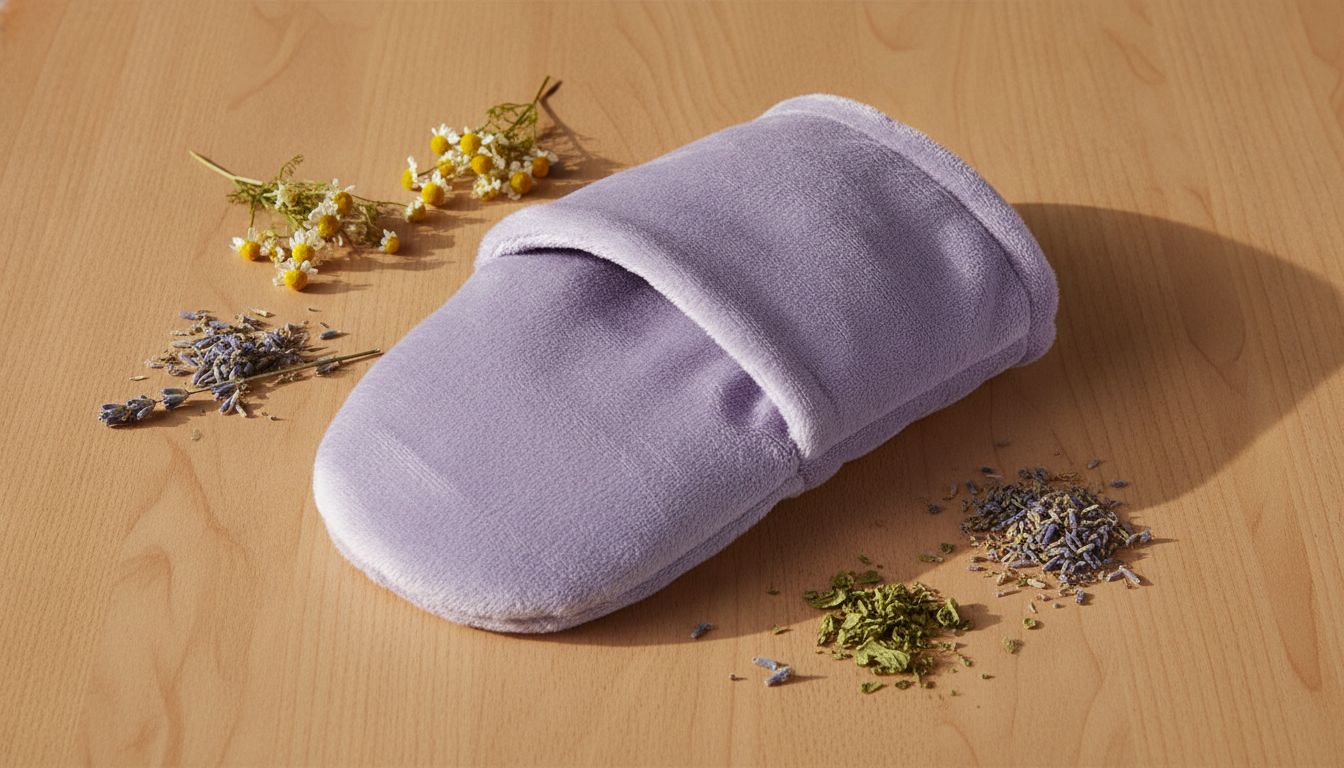
The Herbal Concepts Comfort Mitts are filled with a blend of 12 natural herbs and grains — including lavender, chamomile, eucalyptus, and peppermint — that release a gentle scent when warmed. The physical warmth addresses the circulation and stiffness; the aromatherapy works on the tension that tends to accompany it. It's a small but real difference in how the experience feels compared to a plain heat pack.
The mitts are microwaveable for hot therapy and freezable for cold therapy, so they work in both directions — warming cold, stiff hands in winter or providing cooling relief for swollen, overworked hands after a long day of typing or physical work. The soft polyester fabric and one-size-fits-all design mean you can slip them on without fuss and just let the heat do its work.
People who use them regularly for conditions like arthritis or carpal tunnel often note that the combination of warmth and the calming scent makes the whole experience feel more like a small act of self-care than a medical intervention. That matters — because if something feels good, you'll actually use it consistently, and consistency is what makes any comfort routine work.
Making it a habit, not a rescue mission
The most effective approach to chronically cold hands isn't reactive — waiting until they're completely numb and then scrambling for warmth. It's building a small, predictable routine around it.
A few things that genuinely help:
- Warm your hands before you need to use them. If you work at a keyboard, five minutes of warmth before you start your session can make a real difference in how your hands feel an hour in.
- Break up long periods of sitting. Circulation slows when you're still. Even a short walk every hour keeps blood moving to your extremities.
- Don't ignore your feet. Cold feet disrupt sleep more than most people realize. Warming them before bed — with a heat wrap or even just warm socks — is one of the more underrated sleep tricks around. (If sleep and evening routines are something you're thinking about, our simple evening reset guide covers this in more depth.)
- Layer from the inside out. Keeping your core warm reduces how aggressively your body restricts circulation to your extremities in the first place.
The goal is to stop treating cold hands as something you just endure, and start treating them as a signal worth responding to — gently, consistently, and without making it complicated.
If you want to understand more about how heat therapy works for different types of pain and discomfort, the guide to warm compresses and heat therapy is a good place to start.
The bottom line
Cold hands and feet are your body doing its job — but that doesn't mean you have to be uncomfortable. Targeted warmth, applied directly where you need it, is one of the simplest and most effective things you can do. The Herbal Concepts Comfort Mitts bring that warmth together with aromatherapy in a format that's easy to use every day, not just when things get unbearable.
See the Comfort Mitts and the full Hot & Cold Therapy range at herbalconcepts.com — both designed to bring warmth where you need it most.
Frequently Asked Questions
Why do my hands and feet go cold even when the rest of me feels warm?
Your body uses vasoconstriction — narrowing the blood vessels in your extremities — to redirect warmth toward your vital organs when it senses cold or low activity. This means your core can feel comfortable while your hands and feet stay cold, because less blood (and therefore less heat) is reaching them.
Does applying heat directly to cold hands actually help with circulation?
Yes. Localized heat encourages blood vessels in the area to dilate, which draws circulation back to the hands or feet. This is why a warm compress on your hands often feels more immediately effective than simply putting on an extra layer of clothing.
Can the Comfort Mitts be used for cold therapy as well as heat?
Yes — the Comfort Mitts are both microwaveable for hot therapy and freezable for cold therapy. Cold therapy can be useful for swollen or inflamed hands, while heat is typically better for stiffness, poor circulation, and general discomfort from the cold.
Are herbal heat wraps safe for everyday use on hands?
Herbal heat wraps like the Comfort Mitts are designed for regular, everyday use as a comfort and self-care tool. As with any heat therapy, follow the product's heating instructions carefully and allow it to cool to a comfortable temperature before use. If you have a specific medical condition affecting your hands, it's always a good idea to check with your healthcare provider.