
Hot or Cold? How to Choose the Right Therapy for Your Pain
The Guess That Slows Your Recovery
You wake up with a stiff neck. You reach for whatever is closest — a heating pad, an ice pack, a bag of frozen peas — and hope for the best. Most people choose based on habit or instinct, not on what the body actually needs in that moment.
That matters more than you might think. Heat applied to a fresh injury can increase swelling. Cold applied to a tight, knotted muscle can make it clench harder. Choosing the wrong therapy doesn't just feel unhelpful — it can actively work against you.
This guide breaks it down clearly, so you know exactly which approach to reach for and when.
How Heat Therapy Works
Heat increases blood flow to the area it's applied to. That improved circulation brings oxygen and nutrients to tired or tense muscles, helps them relax, and eases the stiffness that builds up from sitting too long, sleeping in an awkward position, or carrying tension through the day.
Heat also stimulates sensory receptors in the skin in a way that can reduce the perception of pain — which is part of why a warm wrap on sore shoulders feels so immediately comforting.
When to Use Heat
- Chronic muscle tension — stiffness in the neck, shoulders, or back that has been building for days, not caused by a recent injury
- Joint stiffness — especially first thing in the morning, when joints feel locked up before movement loosens them
- Menstrual cramps — heat helps relax the uterine muscles and ease cramping discomfort
- General stress and tension — the warmth signals the nervous system to downshift, which is why heat therapy pairs so naturally with relaxation routines
- Sinus pressure and tension headaches — gentle warmth around the sinus area or at the base of the skull can ease pressure and tight muscles
How Cold Therapy Works
Cold does the opposite: it constricts blood vessels, which slows circulation to the area. That reduction in blood flow limits the inflammatory response — the swelling, redness, and throbbing that follow a fresh injury or flare-up. Cold also numbs nerve endings temporarily, which is why it's effective for sharp, acute pain.
When to Use Cold
- Acute injuries — sprains, strains, or bumps within the first 24 to 72 hours, before significant swelling has set in
- Swelling or inflammation — any time the area feels hot to the touch, looks puffy, or is actively inflamed
- Migraine headaches — cold applied to the forehead or the back of the neck can help constrict the blood vessels that contribute to migraine pain
- Post-workout soreness — cooling down overworked muscles after intense exercise can reduce next-day soreness
- Insect bites or localized irritation — cold numbs the area and reduces the itch-inflammation cycle
The Situations That Trip People Up
Old injury, new flare-up
An old knee injury that flares up after a long hike is not the same as a fresh sprain. If the area is swollen and warm, start with cold. Once the acute inflammation settles — usually after 48 to 72 hours — you can switch to heat to restore circulation and ease stiffness.
Tension headaches vs. migraines
These feel similar but often respond differently. Tension headaches, which tend to feel like pressure around the forehead or base of the skull, often respond well to heat — particularly at the neck and shoulders where the tension originates. Migraines, which involve vascular changes in the brain, often respond better to cold applied at the forehead or temples. Some people find alternating works best for them.
Back pain
Lower back pain from sitting too long or sleeping poorly is typically muscular — heat is your go-to. But if back pain follows a fall or sudden movement and feels sharp, treat it like an acute injury first: cold for the first day or two, then transition to heat as the sharp phase passes.
Why Having Both Options Matters
The reason most households own both a heating pad and an ice pack is that the body's needs shift — sometimes within the same day. A knee that needed ice after yesterday's run may need gentle heat today to loosen up before a walk.
That's exactly why Herbal Concepts wraps are designed to work both ways. Each wrap can be warmed in the microwave for heat therapy or placed in the freezer for cold therapy — no separate products needed, no guessing which drawer the ice pack is in.
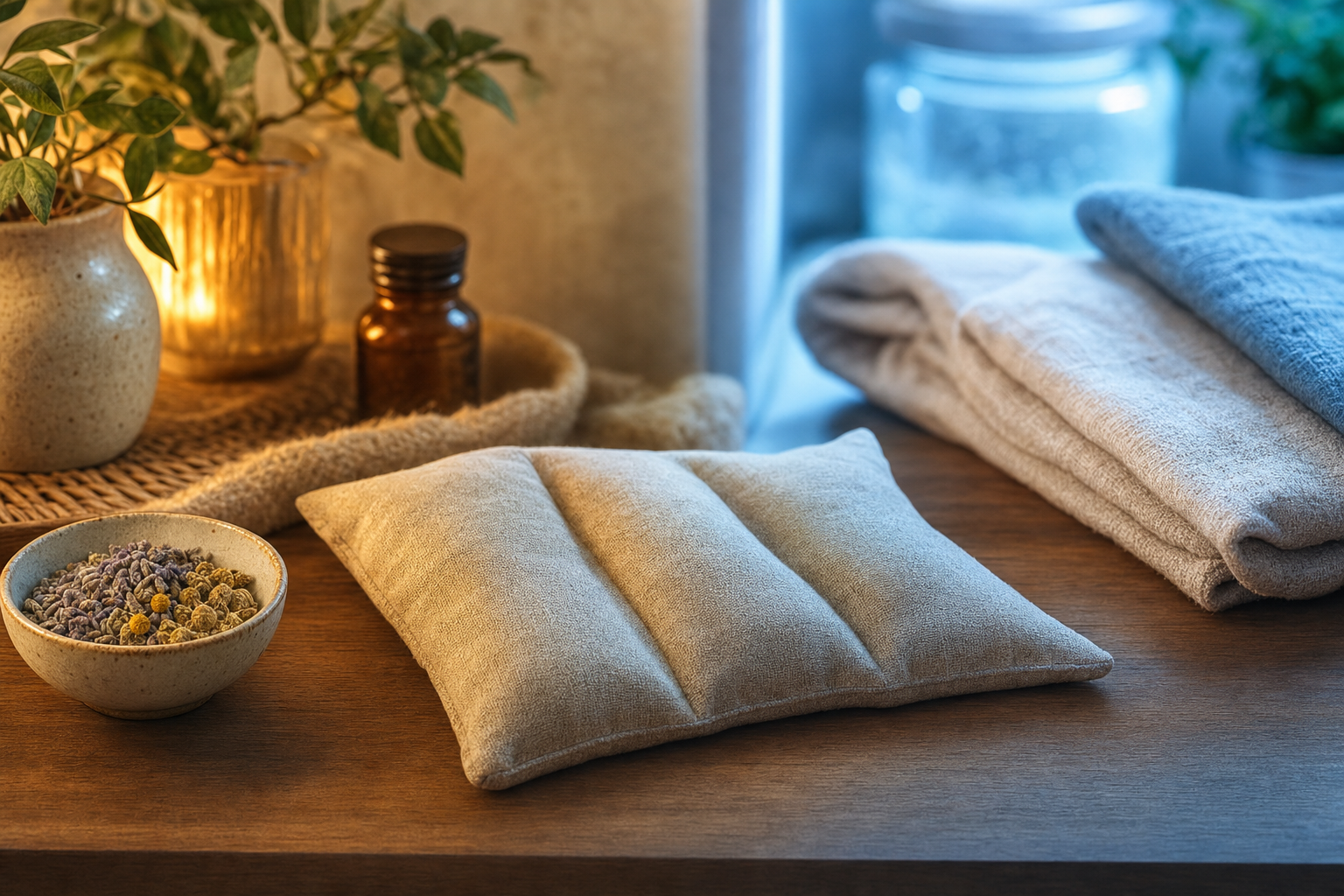
The Herbal Concepts line includes wraps shaped for the areas that need therapy most: the neck and shoulders, the knees, the sinuses and head, and the feet. Each one is filled with a physician-formulated blend of herbs and grains that, when heated, release a gentle aromatherapy effect that adds another layer of relief — something a standard gel pack simply can't offer.
If you deal with recurring neck and shoulder tension, the guide to natural solutions for neck and shoulder pain goes deeper on how wraps fit into a longer-term relief routine. And if you're building out a broader home wellness practice, heat therapy combined with mindfulness is worth exploring for stress and sleep support.
A Simple Decision Guide
- Is the pain from something that just happened? Start with cold.
- Is the area swollen, hot to the touch, or actively inflamed? Use cold.
- Is the pain dull, achy, or stiff — and has been for more than a few days? Use heat.
- Is it a migraine? Try cold at the forehead and temples.
- Is it a tension headache or sinus pressure? Try heat at the neck and base of the skull.
- Not sure? Start with cold for 20 minutes, then reassess. If the area is not swollen or inflamed, switch to heat.
A Note on Timing
For both heat and cold, 15 to 20 minutes per session is a reasonable guideline for most adults. Always place a thin cloth between a cold wrap and bare skin to avoid irritation, and follow the heating instructions for any microwavable wrap — overheating reduces the life of the product and can cause discomfort.
If you have a medical condition, circulatory issues, or nerve sensitivity, check with your healthcare provider before using thermotherapy regularly.
Ready to Stop Guessing?
The right therapy at the right time makes a real difference. Herbal Concepts wraps are built to give you both options — heat and cold — in one handcrafted, natural product, so you're always prepared for whatever your body needs that day.
Shop wraps that do both — heat and cold therapy in one — at herbalconcepts.com.
Frequently Asked Questions
Can you switch between heat and cold on the same injury?
Yes, but timing matters. For a fresh injury, start with cold for the first 24 to 72 hours to manage swelling. Once the acute inflammation has settled, you can transition to heat to loosen stiff tissue and improve circulation. Alternating between the two — sometimes called contrast therapy — is used by some people for chronic conditions, but it's worth checking with a healthcare provider if you're unsure what's right for your specific situation.
How long should you apply heat or cold at a time?
A general guideline for most adults is 15 to 20 minutes per session, with a break in between before reapplying. Leaving either heat or cold on for too long can irritate the skin or cause other issues. Always use a thin cloth barrier between a cold wrap and bare skin, and follow the specific heating instructions for any microwavable product.
Is heat or cold better for tension headaches?
Tension headaches often respond well to heat, particularly when applied to the neck and shoulders where the underlying muscle tightness originates. Migraines, on the other hand, tend to respond better to cold applied at the forehead or temples. If you're unsure which type of headache you experience, a healthcare provider can help you identify the pattern and the best approach.
What makes herbal wraps different from a regular heating pad or ice pack?
Standard heating pads and ice packs deliver temperature therapy only. Herbal wraps filled with a physician-formulated blend of herbs and grains also release a gentle aromatherapy effect when heated, adding a sensory layer of relaxation that a plain pad cannot provide. Herbal Concepts wraps are also designed to be used for both heat and cold, so one product covers both needs without requiring separate items.