
What Wearable Health Devices Can't Do — and Why That Gap Matters for Pain and Stress Relief
Your smartwatch buzzes. Stress level: high. Heart rate variability: low. Recovery score: poor. And there you are, sitting at your desk with a stiff neck, a dull headache building behind your eyes, already knowing all of that — because you can feel it.
That's the quiet frustration at the center of the wearable health tech boom. The devices have gotten genuinely impressive at measurement. They'll tell you exactly when your body is under strain, how your sleep architecture broke down, and how long your nervous system has been running hot. What they can't do is help. The sensor reads the signal; nothing on your wrist does anything about it.
That's not a knock on wearables — tracking is genuinely valuable. But if you've been wearing one for a while and still wake up tense, still hit that 3 p.m. wall with tight shoulders, still reach for ibuprofen on the hard days, it's worth understanding what the gap actually is and what fills it.
The Measurement Loop Isn't the Same as Relief
Wearable devices work by reading physiological signals — heart rate, skin temperature, movement, electrical activity — and translating them into scores and trends. That data can absolutely change behavior over time: you notice that late-night screen time wrecks your HRV, or that skipping lunch makes your stress score spike. Useful patterns.
But pain and tension don't wait for pattern recognition. A tension headache at 2 p.m. on a Tuesday doesn't care that your weekly trend is improving. A stiff neck after a long drive needs something to happen to it, not a data point logged about it.
Physical discomfort is, at its core, a tissue-level event — muscles in spasm, blood flow restricted, nerves firing. Addressing it requires a physical response. That's the gap.
Five Things Direct Therapy Does That a Sensor Simply Cannot
1. Heat relaxes muscle tissue in real time
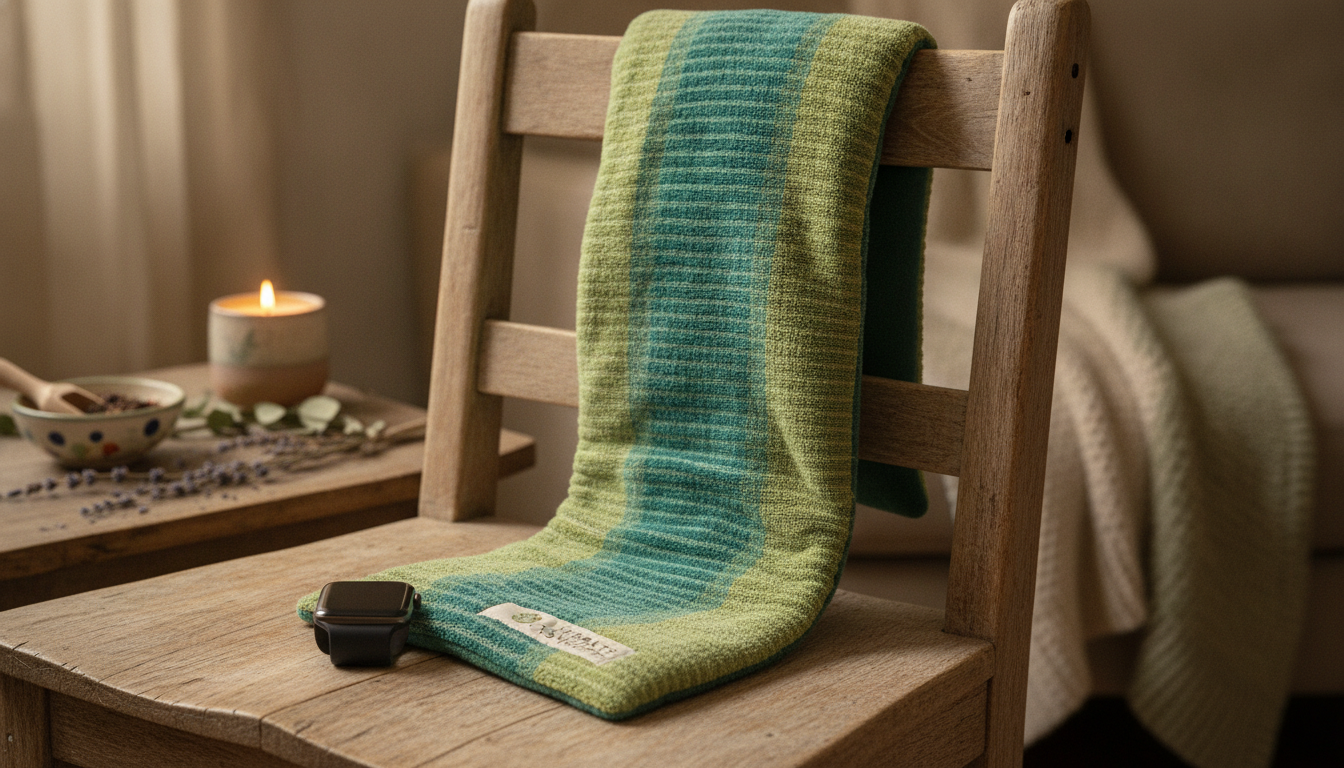
When warmth is applied to a tense muscle, blood vessels dilate, circulation increases, and the tissue itself begins to soften. This isn't a metaphor — it's a mechanical response. A heated herbal wrap draped across tight neck and shoulder muscles delivers that response directly, in the moment, without waiting for a recovery algorithm to suggest you wind down. Your smartwatch can tell you your muscles are under strain; a heated neck wrap can actually start to release it.
2. Cold therapy reduces inflammation at the source
For acute pain — a tweaked knee, a swollen joint, a migraine pressing behind the eyes — cold compression slows the inflammatory response and numbs localized pain signals. No wearable device on the market does this. A chilled herbal wrap placed over a sore knee or across the forehead addresses the tissue directly. Tracking the discomfort and addressing it are two completely different actions.
3. Aromatherapy engages the nervous system through scent
The olfactory system has a more direct pathway to the brain's limbic region — the part involved in emotion and stress response — than almost any other sensory input. Herbal blends that release scent when warmed aren't just pleasant; they engage a physiological process that no screen or sensor touches. This is why an herbal wrap that combines warmth with natural aromatics can feel genuinely calming rather than just comfortable. It's working on two channels at once.
4. Sustained physical comfort signals safety to the nervous system
One of the most underappreciated aspects of heat therapy is what it communicates to a chronically stressed nervous system: that the immediate environment is safe and warm. This is part of why something as simple as warming your feet can shift your whole body out of a low-grade alert state. A wearable measures that shift after it happens. Warmth helps cause it.
5. It creates a deliberate pause in your day
Putting on a neck wrap, settling in for ten or fifteen minutes, and actually stopping — that act itself has value that data collection doesn't replicate. Your watch can log that you were sedentary for twelve minutes. It can't make those twelve minutes restorative. Intentional rest, supported by physical comfort, is a different thing from simply not moving. If you're building an evening reset routine, this is exactly the kind of anchor that makes it stick.
They're Complementary, Not Competing
The point here isn't that wearables are useless — it's that measurement and intervention are different tools for different jobs. Your health tracker is excellent at the "notice and track" side of wellness. Herbal heat and cold therapy handles the "do something about it right now" side. Used together, they actually reinforce each other: the data shows you when and where tension patterns appear, and the physical therapy gives you a reliable way to respond.
Some people find that pairing a ten-minute herbal wrap session with a mindful breathing practice — something their wearable might already prompt them toward — produces noticeably better recovery scores the next morning. That's not coincidence. It's two complementary systems working in the same direction. For more on how heat therapy and mindfulness work together, that pairing is worth understanding on its own terms.
The Honest Takeaway
If your wearable has been faithfully telling you that your stress is high and your recovery is poor — and you're still waiting to feel better — you're probably missing the intervention half of the equation. Knowing your body is under strain is step one. Step two requires something your watch can't do: actually touching the problem.
Warmth, cold, and natural aromatherapy aren't low-tech alternatives to modern wellness tools. They're the part of the equation that works on your body directly, in the moment, without needing a Bluetooth connection to do it.
Already tracking your stress? Try addressing it directly — browse Herbal Concepts' herbal heat and cold wraps, handcrafted and physician-formulated in the USA since 1996. Use code HERBALVIBES10 for 10% off your order.
Frequently Asked Questions
Can I use a herbal heat wrap and still rely on my wearable device for wellness tracking?
Absolutely — they serve different purposes. Your wearable tracks physiological signals like heart rate variability and sleep quality over time, which helps you spot patterns. A herbal heat or cold wrap provides direct, in-the-moment physical relief for tension, pain, or inflammation. Using both means you're covering the tracking side and the intervention side of wellness.
When should I use heat versus cold therapy for pain?
A general rule of thumb: heat works well for chronic muscle tension, stiffness, and stress-related tightness because it increases blood flow and relaxes tissue. Cold is typically better for acute pain, swelling, or inflammation — a fresh injury, a throbbing headache, or a recently irritated joint. Many herbal wraps, including those from Herbal Concepts, are designed to work both ways depending on whether you warm or chill them.
How does aromatherapy in herbal wraps actually help with stress?
Scent has a more direct route to the brain's emotional and stress-processing centers than most other sensory inputs. When a herbal wrap is warmed, the natural herbs inside release aromatic compounds that engage this pathway — which is why the experience can feel calming rather than just physically comfortable. It's a separate mechanism from the heat itself, working alongside it rather than just adding a pleasant smell.
How often can I use a herbal heat or cold wrap?
Herbal wraps are designed for regular, everyday use as part of a self-care routine — not just for acute flare-ups. Many people use them daily, whether as part of a morning warm-up, a midday tension break, or an evening wind-down. Follow the care and use directions that come with your specific wrap, and if you have a medical condition affecting circulation or sensation, check with your healthcare provider first.