
Red Light Therapy vs. Heat Therapy: Two Very Different Things — and How to Know Which One You're Actually Looking For
You've probably seen the ads: sleek red-glowing panels, before-and-after photos, claims about cellular regeneration. Red light therapy has had a serious moment, and if you've been researching it because your neck is constantly tight or your knees ache after a long day, you're not alone. But there's a good chance the two things — red light therapy and what you're actually looking for — aren't the same thing at all.
This isn't a post designed to talk you out of red light therapy. It's designed to help you figure out which problem you're actually trying to solve, so you don't spend several hundred dollars on a device when a different approach might work better for your situation — or vice versa.
What Red Light Therapy Actually Is
Red light therapy (sometimes called low-level laser therapy or photobiomodulation) uses specific wavelengths of red and near-infrared light to penetrate the skin. The idea is that certain light wavelengths can interact with cells — specifically with mitochondria — in ways that may support tissue repair and reduce inflammation. The research is genuinely interesting, particularly for wound healing and certain skin conditions. Some studies suggest benefit for joint pain and muscle recovery as well, though the evidence is still developing and results vary widely depending on the device, the wavelength, the dose, and the condition being treated.
What red light therapy does not do is generate meaningful warmth. That's not a flaw — it's just physics. The mechanism is photochemical, not thermal. If you're expecting to feel the soothing, enveloping warmth of a heating pad, a red light panel won't give you that. The two experiences are genuinely different.
What Heat Therapy Actually Does
Heat therapy works through a completely different pathway: warmth increases blood flow to the area, helps relax muscle fibers, and reduces the sensation of stiffness. It's been used for muscle tension, joint aches, menstrual cramps, and general stress relief for a very long time — and the mechanism is well understood. When your shoulders have been hunched over a keyboard all day and they're knotted and sore, heat is addressing that directly: it's loosening the tissue, improving circulation, and signaling your nervous system to ease up.
Cold therapy works on a complementary principle — reducing blood flow and inflammation, which is why it's often the first response to an acute injury or a throbbing headache. The combination of being able to use the same wrap as either hot or cold is one of the more practical aspects of herbal heat wraps: one tool, two modes, depending on what your body needs that day.
Add aromatherapy to the equation — the kind that comes from herbs and grains warmed gently in a microwave — and you're also engaging the olfactory system, which has a well-documented connection to the stress response. That's not a small thing when tension is as much about your nervous system as it is about your muscles.
The Honest Comparison
Here's where it helps to be direct about what each approach is and isn't good at.
Red light therapy may be worth exploring if: you're dealing with a specific condition like skin concerns, wound healing, or you want to experiment with photobiomodulation for recovery. You're prepared to research devices carefully (wavelength and power output matter enormously — not all devices are equivalent), and you have the budget for a quality unit. Cheap red light panels sold online vary widely in their actual output, so this is a category where the device quality really does matter.
Heat therapy is likely what you're looking for if: your main complaint is muscle tension, stiffness, everyday aches, stress, or disrupted sleep from physical discomfort. You want something you can use tonight without setup, charging, or research. You respond well to warmth — the kind that actually feels like something. And you'd rather not spend a significant sum to find out whether a technology works for you.
The overlap between the two audiences is real. A lot of people searching "red light therapy for neck pain" are actually describing the kind of chronic, low-grade tension that heat therapy has addressed reliably for decades. The red light search is often a proxy for "I want something that actually helps and isn't just ibuprofen again."
Why the Price Gap Matters More Than It Seems
A quality red light therapy panel can run anywhere from a couple hundred dollars to well over a thousand, depending on the size and specifications. That's not a reason to dismiss it if it's genuinely the right tool — but it is a reason to be clear about what problem you're solving before you buy one.
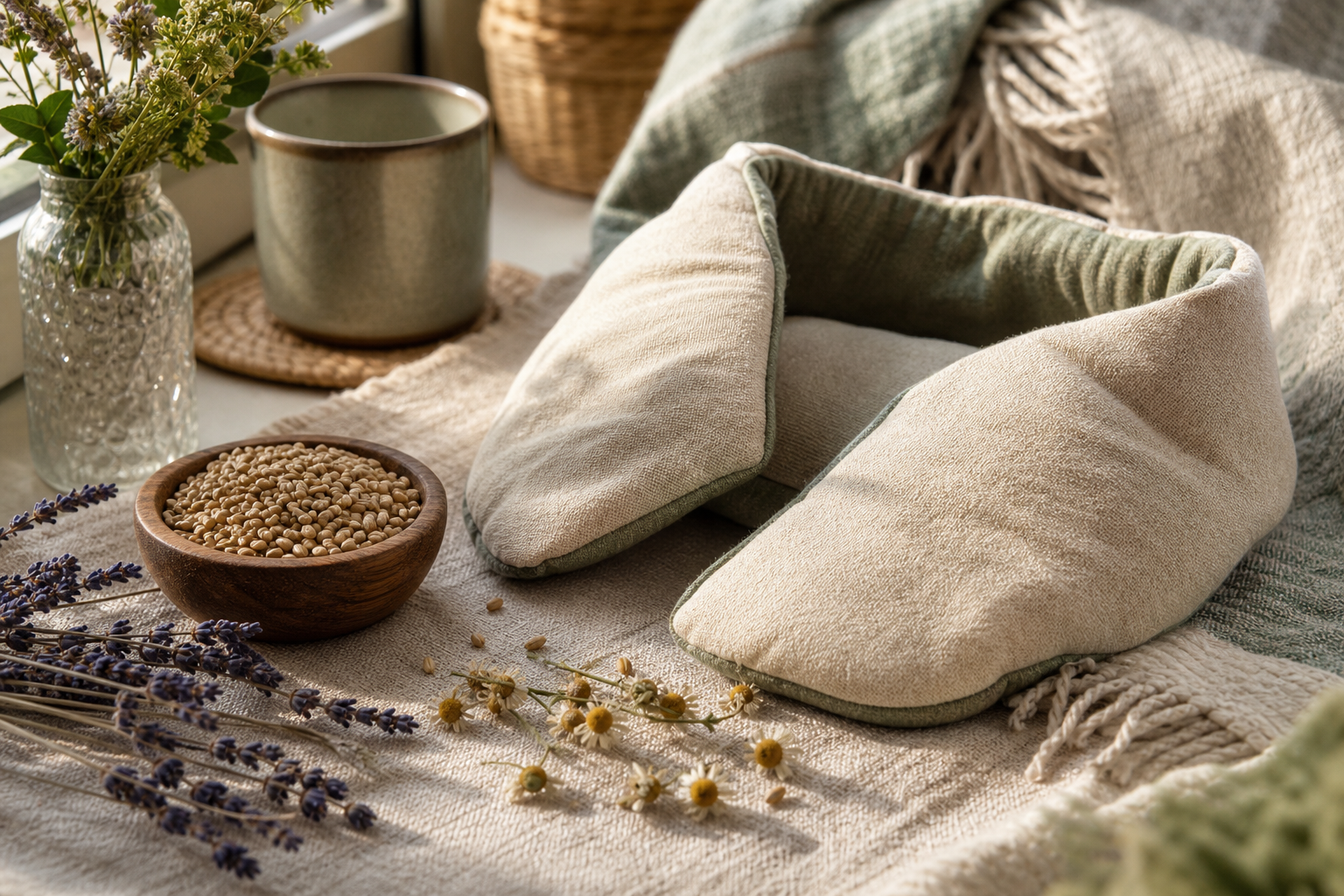
A microwaveable herbal wrap, by contrast, is something you can use in the next twenty minutes. Warm it up, drape it over your neck and shoulders, and sit somewhere quiet for a bit. No setup. No charging. No learning curve. If you've had a brutal week and your body is asking for relief, the barrier to actually using it is almost zero — and that matters, because the best tool is the one you'll actually reach for.
For people who want to explore heat therapy as a daily self-care habit, it's also worth knowing that building a simple evening reset routine around something like a herbal wrap can do a lot of the heavy lifting that people associate with more expensive wellness tools.
Can You Use Both?
Yes, and there's no reason to treat this as an either/or. If you're already using red light therapy for a specific purpose and want to add heat therapy for everyday muscle tension and stress relief, they address different enough mechanisms that they're not redundant. Think of red light as a targeted intervention and heat therapy as a daily comfort practice — the kind of thing you build into your evening the way you'd build in a stretch or a cup of tea.
What you probably don't want to do is buy an expensive device hoping it will replicate the feeling of warmth and immediate physical relief, because it won't. That's not what it's for.
The Simpler Question to Ask Yourself
Before you research another device, ask yourself: what does relief actually feel like for me? If the answer involves warmth, softness, something draped over a sore spot, and the ability to just exhale — that's heat therapy. If the answer is more about supporting recovery from a specific condition over time and you're willing to research the science and invest in the right equipment, red light therapy might genuinely be worth your attention.
Most people, when they're honest about it, are describing the first thing.
Herbal wraps like the ones from Herbal Concepts — filled with a physician-formulated blend of herbs and grains, usable as both hot and cold therapy — exist precisely for that first category. They've been doing it since 1996, quietly, without a lot of noise. Sometimes the most effective tool is also the most straightforward one. If you want to go deeper on how heat therapy works for specific areas, the guide to warm compresses and heat therapy is a good place to start.
Not ready to spend hundreds on a device? See how Herbal Concepts herbal wraps deliver warmth and aromatherapy in one step — and use code HERBALVIBES10 for 10% off your first order.
Frequently Asked Questions
Does red light therapy feel warm like a heating pad?
No — and this surprises a lot of people. Red light therapy works through a photochemical process, not a thermal one. You may feel a very mild warmth from some devices, but it's nothing like the enveloping heat of a heating pad or herbal wrap. If the sensation of warmth is part of what you're looking for, red light therapy won't deliver that.
Can I use heat therapy and red light therapy at the same time?
Generally, yes — they work through different mechanisms and aren't redundant. Many people use heat therapy for everyday muscle tension and stress relief while exploring red light therapy for a more specific purpose. That said, it's always worth checking with your healthcare provider if you have any underlying conditions before combining new therapies.
Is heat therapy or cold therapy better for muscle tension?
For chronic muscle tension and stiffness — the kind that builds up from stress, posture, or repetitive movement — heat is usually the better choice. It relaxes muscle fibers and improves circulation. Cold therapy is typically more useful for acute injuries, swelling, or a throbbing headache, where you want to reduce blood flow rather than increase it. Many herbal wraps can be used both ways, so you're not locked into one mode.
How often can I use a herbal heat wrap?
Herbal heat wraps are designed for regular, everyday use. Many people incorporate them into a nightly routine — warming one up while they wind down before bed — or reach for one during the day when tension builds. Always follow the specific instructions that come with your wrap regarding heating times and intervals to use it safely.