
Do Natural Sleep Aids Actually Work? What the Evidence Says (and What's Often Missing from the Conversation)
If you've ever typed "natural sleep aids" into a search bar at midnight, you already know what you'll find: melatonin gummies, magnesium capsules, valerian root, and a dozen other supplements all promising to knock you out by 10 p.m. Some of them genuinely help. Some of them are expensive placebos. But almost none of those results will mention the things that might actually be missing from your wind-down routine — warmth, scent, darkness, and the kind of sensory calm your nervous system needs before it'll let you sleep.
This post is going to be honest with you about what the evidence says and where the gaps are. And then it's going to make the case for a broader, more practical approach to natural sleep support — one that doesn't require swallowing anything.
What We Mean When We Say "Natural Sleep Aids"
The term gets used loosely. In most contexts it means ingestible supplements — melatonin, magnesium glycinate, L-theanine, chamomile tea, ashwagandha. These are the products that dominate search results and pharmacy shelves, and some of them have real research behind them.
Melatonin, for example, is well-studied for resetting circadian rhythm disruptions — jet lag, shift work, delayed sleep phase. It's less clearly effective as a general "fall asleep faster" solution for people whose sleep timing isn't disrupted. Magnesium plays a role in nervous system regulation and muscle relaxation, and some people notice a genuine difference. But the effect sizes in studies tend to be modest, and what works for one person does very little for another.
The honest answer to "do natural sleep aids work?" is: some of them, for some people, in some situations. That's not a cop-out — it's just the truth about sleep, which is deeply individual and influenced by far more than any single supplement.
The Part of the Conversation That Gets Skipped
Here's what rarely makes it into the natural sleep aid discussion: your body doesn't decide to sleep based on one signal. It decides based on a constellation of them — and most of those signals are sensory and environmental, not chemical.
Body temperature is one of the most powerful. Your core temperature naturally drops as you approach sleep, and that drop is part of what signals your brain to shift toward rest. You can actually work with this process rather than waiting for it to happen on its own. Warming your feet before bed — through a warm bath, warm slippers, or a heated wrap — encourages blood vessels near the skin surface to dilate, which helps pull heat away from your core. The result is that your core temperature drops a little faster, and sleep onset can come sooner. This isn't folk wisdom; it's a well-established mechanism in sleep physiology.
Scent is another underrated lever. Aromatherapy isn't magic, but the olfactory system has a direct connection to the limbic system — the part of the brain involved in emotion and memory — and certain scents have a measurable calming effect on the nervous system. Lavender is the most studied; chamomile, eucalyptus, and other herbs have also been used in relaxation contexts for a long time. The mechanism isn't sedation — it's more like a signal to your nervous system that it's safe to slow down.
Light and darkness round out the picture. Blocking light from reaching your eyes — even ambient light from a streetlamp or a charging cable — matters because your brain reads light as a "stay awake" signal. An eye pillow or sleep mask creates a simple, low-tech blackout that supports the same melatonin production that a supplement is trying to trigger artificially.
Why Sensory Approaches Are Worth Taking Seriously
There's a reason people have been using warm baths, herbal sachets, and darkened rooms to wind down for centuries — these approaches work with the body's own mechanisms rather than overriding them. They don't carry the risk of dependency, they don't interact with medications, and they tend to compound over time as your nervous system starts to associate the ritual with sleep.
That last point matters more than people give it credit for. Sleep researchers call it "stimulus control" — the idea that consistent pre-sleep cues train your brain to anticipate sleep when those cues appear. A warm herbal wrap, a familiar scent, and darkness become a package signal: this is what we do before sleep. Over time, the ritual itself becomes part of what makes sleep easier.
This is where something like an herbal eye pillow earns its place. A good one does two things at once: it blocks light and delivers a gentle, consistent scent — often lavender or a blend of calming herbs — right where your senses are most receptive. Herbal Concepts' eye pillow guide goes deeper on how these work and what to look for if you want to explore that further.
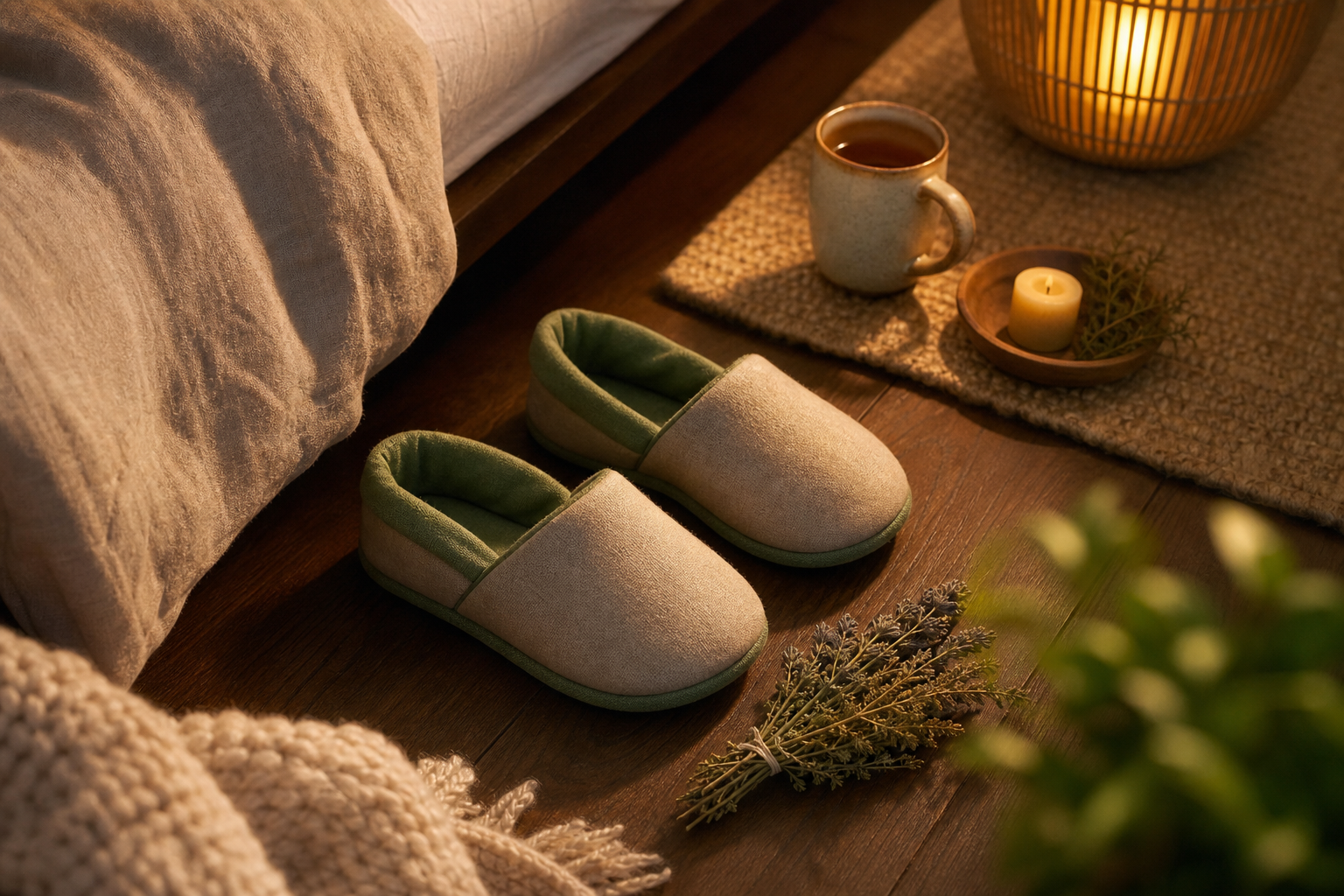
Similarly, warming your feet with herbal comfort slippers before bed — rather than relying on the ambient heat of your bedroom — gives you a more targeted way to trigger that core temperature drop. It's a small adjustment, but it's one that addresses a real physiological mechanism rather than just hoping for the best.
Building a Pre-Sleep Routine That Actually Does Something
The most effective natural approach to sleep isn't one product or one supplement — it's a short, consistent sequence that stacks sensory cues together. Here's a practical framework:
- Dim the lights at least 30-60 minutes before bed. This is free, and it's one of the highest-leverage things you can do. Your brain starts producing melatonin in response to darkness, and bright overhead lights actively suppress that process.
- Warm your feet or lower body. A pair of herbal heated slippers, a warm foot soak, or a microwavable wrap for your lower legs — any of these can support the heat-redistribution process that helps your core temperature drop. Keep it gentle; you're not trying to overheat, just nudge the process along.
- Introduce a consistent scent. An herbal eye pillow placed over your eyes while you lie down combines the light-blocking and scent cues in one simple step. If you use the same scent every night, it becomes a powerful conditioning signal over time.
- Put the phone down — physically away from the bed. This isn't about blue light alone; it's about removing the stimulus that keeps your brain in a reactive, alert state. Even face-down on your nightstand, your phone is a sleep disruptor.
If you want a more detailed look at structuring your evenings for better sleep and lower stress, the evening reset routines post covers this well. And if you're curious about the aromatherapy side specifically, this guide on essential oils for sleep digs into which scents have the most evidence behind them.
So — Do Natural Sleep Aids Work?
Yes, with caveats. The supplement options have real but variable effects, and they work best when the rest of your sleep environment is already set up to support rest. The sensory and environmental approaches — warmth, scent, darkness, ritual — are often more reliable because they work with your body's built-in systems rather than trying to chemically nudge them from the outside.
The most common mistake people make is treating sleep as a problem to solve with a single product. It's not. It's a process your body already knows how to do — it just needs the right conditions. Give it those conditions consistently, and most people find they need fewer interventions, not more.
Start with one small addition to your evening: a warm herbal wrap for your feet, an eye pillow to block the light, or even just dimming the lights an hour earlier. You don't need to overhaul your entire routine tonight. Pick one thing, do it for a week, and see what shifts.
Ready to try it? Shop Herbal Concepts' full collection — from herbal comfort slippers to eye pillows and neck wraps — and find the piece that fits your wind-down routine. Use code HERBALVIBES10 for 10% off your order.
Frequently Asked Questions
Are herbal wraps and eye pillows safe to use every night?
Generally, yes — herbal heat and aromatherapy wraps are designed for regular, everyday use. They don't carry the dependency or tolerance concerns associated with some sleep supplements. As with any heated product, follow the manufacturer's instructions and don't fall asleep with a microwaved wrap still in place if it's very warm.
How long does it take for a pre-sleep routine to start working?
Consistency matters more than duration. Most people notice that a regular wind-down sequence starts to feel effective within one to two weeks, as the brain begins associating the cues with sleep. The first few nights may not feel dramatically different — stick with it.
Can I combine an herbal eye pillow with a supplement like melatonin?
Yes. Sensory approaches and supplements aren't mutually exclusive. Many people find that when they address the environmental side of sleep — light, warmth, scent — they actually need a lower dose of any supplement they use, or eventually don't need it at all. But combining them is perfectly reasonable while you're building the habit.
Does the scent in herbal wraps fade over time?
The aromatic herbs in quality herbal wraps do mellow with repeated use and heat cycles — this is normal with any natural botanical product. Many people find that a light mist of water before microwaving helps reactivate the scent. When the aroma has faded significantly, it's a good indicator that it's time to replace the wrap.